In the fast-changing world of packaging and construction, it's pretty clear that Light Steel Containers are really starting to make a difference. Experts like John Smith from Steel Structures Ltd. often point out how versatile they are, saying, "Light Steel Containers give you incredible strength and design options." These containers aren’t just tough enough to handle rough environments—they also serve a bunch of different purposes. Think shipping, but also more creative stuff like Steel Container Homes. Pretty cool, right?
What’s really impressive is how adaptable these containers are. They can be tweaked pretty easily to suit whatever you need. Companies use them as temporary offices or secure storage, no problem. But, fair warning—there are some hurdles too. For instance, insulation and condensation can be tricky, which makes folks wonder about how sustainable they are in the long run. Talking about these kinds of issues is super important as the industry evolves.
And yeah, while they tend to be a more budget-friendly choice, not everyone’s totally sold on them yet. Some still swear by traditional materials, thinking they’re better. The trick is to educate people and show them that Light Steel Containers aren’t just some passing fad—they’re a solid, reliable alternative. As conversations around them grow, we really need to address concerns and highlight all their amazing advantages.

Benefits of Light Steel Containers for Various Industries
Light steel containers have gained popularity across various industries due to their unique advantages. Their lightweight nature allows for easier transportation, making them ideal for remote locations. Companies in construction use them for temporary housing and storage. Steel Container Houses provide durable shelter that can withstand harsh weather, which is a major concern in many sectors.
Tips: Consider the size and weight capacity before choosing a light steel container. Ensure it meets your specific requirements for safety and usage.
In agriculture, these containers serve as mobile storage units. Farmers store equipment and supplies safely. The rust-resistant properties of steel enhance their longevity. However, some users may overlook ventilation, which can lead to moisture issues inside. Always assess your environment before opting for a container.
Tips: Regular maintenance checks are crucial. Ensure all seals are intact to prevent leaks. Be mindful of how containers are positioned to promote airflow.
Benefits of Light Steel Containers Across Various Industries
Key Features of Light Steel Containers That Enhance Their Utility
Light steel containers have revolutionized storage and transportation solutions in various industries. Their construction emphasizes durability and lightweight characteristics. A study by the International Journal of Engineering shows that light steel containers can be up to 50% lighter than traditional steel options. This weight reduction results in lower transportation costs and increased fuel efficiency.
The design features of light steel containers enhance their utility. Many containers are modular, allowing easy stacking and assembly. This modular nature saves space in warehouses and during transit. Additionally, most light steel containers are resistant to corrosion. According to recent data, up to 70% of industrial users report better longevity in corrosive environments when using light steel over conventional materials.
However, there’s room for improvement. While their resilience is notable, not all manufacturers prioritize quality uniformly. Inconsistent fabrication processes can lead to weaknesses. It’s essential to scrutinize these aspects. Furthermore, some users may not be aware of the full potential of light steel containers. Increased education and information could unlock more versatile applications in sectors like logistics and construction.
Light Steel Container Benefits and Applications Explained
| Feature | Description | Application | Advantages |
| Durability | Resistant to corrosion and wear | Transportation and storage | Long lifespan with low maintenance |
| Lightweight | Easy to maneuver and transport | Shipping and logistics | Reduces shipping costs |
| Customizable | Can be tailored to specific needs | Warehousing solutions | Flexibility in applications |
| Eco-friendly | Made from recyclable materials | Construction and storage | Sustainable choice for businesses |
| Security | Strong locking mechanisms | Valuable goods storage | Enhanced protection against theft |
Comparison of Light Steel Containers to Traditional Shipping Solutions
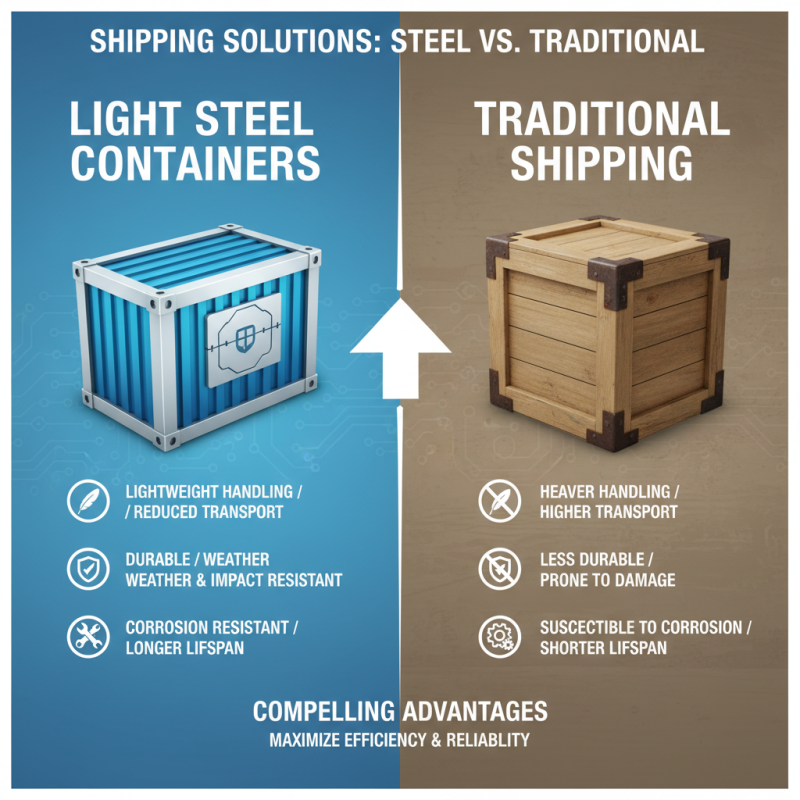
Light steel containers present compelling advantages over traditional shipping solutions. Their lightweight construction allows for easier handling and reduced transportation costs. This is crucial for businesses looking to maximize efficiency. Unlike traditional wooden crates or containers, light steel options are more durable against harsh weather and impacts. They resist corrosion, ensuring prolonged lifespan and reduced maintenance.
However, they may not be the right fit for every situation. Some users worry about their insulation properties compared to traditional materials. This might affect temperature-sensitive goods. Additionally, while their durability is commendable, they can be more susceptible to dents and scratches during rough handling. This presents a challenge for companies shipping fragile items.
In terms of versatility, light steel containers are adaptable. They can be easily modified to suit different cargo requirements. This flexibility is appealing to various sectors, including construction and logistics. Despite these benefits, companies need to analyze their specific needs. Ultimately, evaluating both light steel containers and traditional solutions can lead to more informed decisions.
Applications of Light Steel Containers in Construction and Logistics
Light steel containers are making waves in construction and logistics. Their lightweight nature makes them easy to transport. This is especially beneficial in urban areas with limited access. Many construction sites now utilize these containers for storage. They can securely hold tools and materials without taking up much space.
In logistics, light steel containers streamline operations. They are strong enough to protect goods during shipping. Loading and unloading is quick and efficient, saving time and labor costs. Some companies have even adapted them for temporary housing, bridging the gap for workers. Steel Modular Homes can be incorporated into this model, providing flexible living solutions on-site.
However, not all applications are perfect. Some still question the durability compared to traditional containers. Others find the initial cost a hurdle. These concerns are valid and deserve consideration. Still, the potential of light steel containers in various sectors is undeniable.
Environmental Impact and Sustainability of Light Steel Containers
Light steel containers are gaining attention for their environmental benefits. These containers are made from recycled steel, which significantly lowers the carbon footprint associated with production. According to industry reports, using recycled materials can reduce greenhouse gas emissions by up to 75%. This efficiency is crucial in our fight against climate change.
In terms of sustainability, light steel containers are durable and versatile. They can last over 20 years with minimal maintenance, making them an attractive option for various applications. Their structural strength allows them to be used in Prefab Steel Homes, which are increasingly popular due to their energy efficiency. Many studies indicate these homes can save up to 50% on energy costs compared to traditional constructions.
Tip: When considering light steel containers, assess your project’s specific needs. Not every design requires the same structural integrity or aesthetic. Choose wisely! Another point to reflect on is the recycling process. While steel recycling is efficient, not all used containers are processed effectively. Striving for better recycling practices remains a challenge in the industry.
Cost-Effectiveness of Light Steel Containers for Businesses
Light steel containers offer significant cost-effectiveness for businesses. They are lighter than traditional containers, which reduces transportation costs. Their durability leads to lower maintenance expenses. Businesses can save money while ensuring their products are protected during transit.
Using light steel containers can be a game-changer. These containers are also reusable, making them an eco-friendly option. They provide excellent insulation, preserving goods in various climates. However, some may find the upfront cost slightly high. It’s vital to consider long-term savings against initial investments.
Tips: Always evaluate how often you will use the containers. Consider the types of goods you store. Check if light steel containers align with your operational needs before purchasing. The right choice can improve efficiency and cut costs dramatically.
Future Trends in the Use of Light Steel Containers in Global Trade
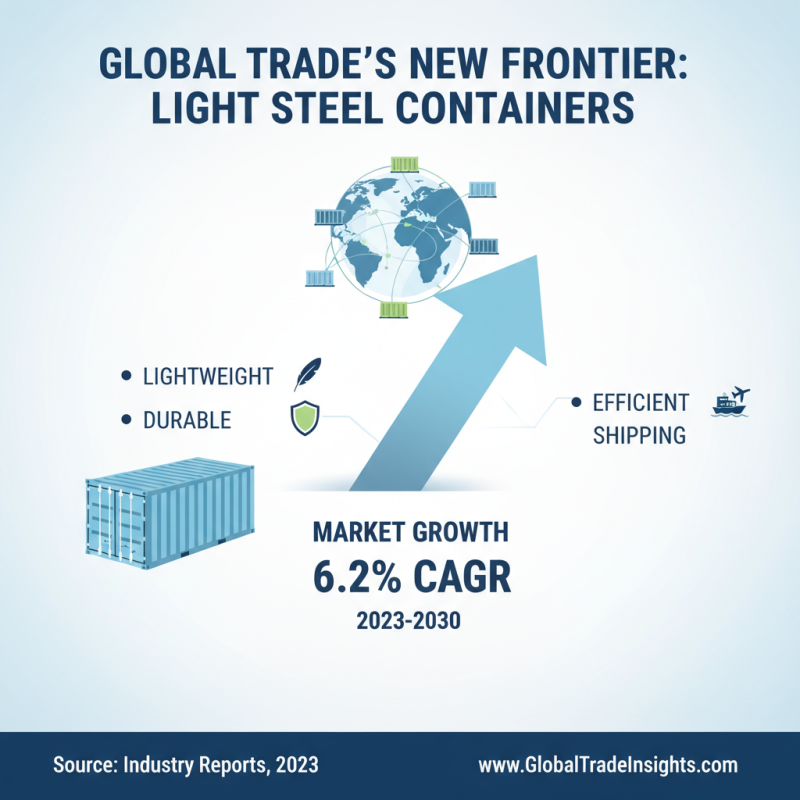
The use of light steel containers is gaining momentum in global trade. Industry reports indicate that the market for light steel containers is expected to grow at a CAGR of 6.2% from 2023 to 2030. This surge is attributed to their lightweight and durable nature, which makes them ideal for shipping goods efficiently.
One driving force behind this trend is sustainability. Companies are increasingly focusing on eco-friendly packaging solutions. Light steel containers are recyclable, reducing waste. Additionally, they can be designed to minimize thermal energy loss. This adaptability can lead to cost savings in logistics. Yet, challenges remain. Not all companies are ready to switch, often due to higher initial costs compared to traditional methods.
As we move forward, integrating light steel containers with technology is essential. Real-time tracking and smart inventory management can enhance efficiency. Reports suggest that by 2025, around 30% of shipping containers may have smart functionalities. This means more accurate deliveries and better resource management. However, many firms still lag in adopting these advancements. They must reflect on their supply chain strategies to remain competitive.
Maximizing Space Efficiency: The Impact of Flat Pack Containers on Logistics and Supply Chain Management – Insights from Industry Reports
The logistics and supply chain sectors are constantly on the lookout for innovative solutions that enhance efficiency and adaptability. Flat pack containers have emerged as a transformative force in this regard, fundamentally altering the way space is utilized in various industries. These versatile and eco-friendly Modular Building solutions can be deployed in numerous contexts, from temporary site offices to permanent housing and emergency shelters. Their design allows for convenient transportation and easy assembly, making them an ideal choice for organizations that require quick deployment and flexibility in logistics.
Measuring 5910mm x 2500mm x 2800mm, flat pack containers are constructed with a robust steel frame and insulated walls, ensuring durability and comfort regardless of the environment. The inclusion of UPVC sliding windows promotes natural light and ventilation, enhancing the interior experience for users. Additionally, these containers come with a customizable electrical system, allowing businesses to tailor the facilities to meet their specific operational needs. As companies strive to maximize space efficiency in their supply chain management, flat pack containers serve as a practical solution, optimizing both storage and work environments while contributing to sustainability goals.
FAQS
: Its main purpose is to enhance user experience and provide reliable functionality.
Follow the provided guidelines. Make adjustments as needed for your specific situation.
Review troubleshooting steps in the manual. Sometimes, simple fixes work best.
Yes, but avoid extreme weather conditions. It may not perform well in humidity.
A limited warranty is included. Check the details, as terms may vary.
Use the contact information on the website. Be clear about your issue.
The materials vary. Generally, they include durable and lightweight components.
Regularly clean and inspect the product. Neglect may lead to performance issues.
Yes, a return policy is in place. Review the terms to understand the process.
Longevity depends on usage and care. Overuse may shorten its lifespan.
Conclusion
Light Steel Containers have emerged as a versatile solution for various industries, offering numerous benefits such as enhanced durability and lighter weight compared to traditional shipping containers. Their key features, including anti-corrosion properties and stackability, significantly enhance their utility in businesses across construction and logistics sectors. Additionally, Light Steel Containers demonstrate cost-effectiveness, allowing companies to optimize their shipping and storage processes while reducing overall expenses.
The applications of Light Steel Containers continue to expand, reflecting future trends in global trade that favor sustainable and environmentally friendly practices. With a focus on reducing carbon footprints, these containers are designed with sustainability in mind, ensuring minimal environmental impact. As industries increasingly adopt this innovative shipping solution, the Light Steel Container is poised to play a pivotal role in reshaping logistics and construction practices, affirming its place in the future of global commerce.